Haweni Display Font for Handmade Labels & Seasonal Designs
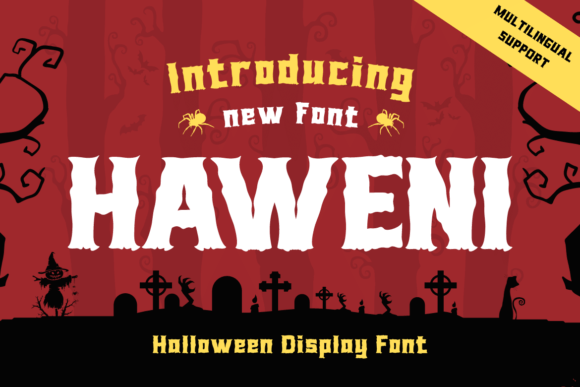
As a maker who designs printable invitations, boutique tags, and seasonal product packaging, I’ve spent years hunting for display fonts that do more than just look pretty—they need to work. Haweni is one of those rare typefaces that balances expressive charm with real-world usability. It’s not a spooky Halloween font in the cliché sense—no dripping blood or jagged edges—but rather a warm, inviting display font with subtle vintage flair and confident legibility. Think farmhouse signs meeting modern stationery: soft curves, balanced spacing, and just enough personality to stand out on a candle label or a wedding welcome board.
Haweni shines where clarity meets character—especially at medium to large sizes. Its clean letterforms hold up beautifully when cut on Cricut or Silhouette machines, even down to 0.25" height on sticker sheets. I’ve used it for mini gift tags on artisan soaps, and customers consistently comment on how “elegant yet approachable” the text feels. That’s Haweni’s quiet superpower: it elevates handmade goods without shouting. Whether you’re printing on kraft paper, matte vinyl, or glossy cardstock, the font’s consistent stroke weight and open counters prevent ink bleed and maintain crispness.
For physical product labels—like small-batch honey jars, bath salt bags, or ceramic mug decals—Haweni delivers strong brand recognition. Its slightly rounded terminals and gentle contrast between thick and thin strokes give it warmth without sacrificing readability. Unlike overly decorative scripts that blur at small sizes, Haweni stays sharp and friendly, even in 14–16pt on product tags. I use it for shop name headers on Etsy banners, then pair it with a clean sans serif (like Montserrat or Inter) for ingredient lists or care instructions—creating visual hierarchy that guides the eye naturally.
Seasonal projects are where Haweni truly sings. Yes, it works beautifully for Halloween-themed printables—think “Trick or Treat” banners, pumpkin patch signage, or printable party games—but its versatility extends far beyond October. I’ve designed Easter egg hunt maps, summer farmers’ market tote bag quotes, and cozy autumn tea towel prints all using Haweni as the primary display font. Its neutral-yet-charming tone avoids seasonal clichés while still feeling intentional and festive. For wedding stationery, it pairs effortlessly with delicate serif body fonts (like Playfair Display or Cormorant Garamond), lending a refined but unstuffy vibe to welcome signs and menu cards.
When designing digital downloads—planner stickers, wall art PDFs, or Canva-ready templates—I rely on Haweni’s consistent metrics and well-hinted outlines. It renders cleanly across devices and prints crisply from home printers or professional offset runs. The font includes standard OpenType features like stylistic alternates and ligatures, which add subtle polish to phrases like “Hand-Poured” or “Small Batch.” While it’s not intended for long paragraphs, Haweni excels in short, impactful phrases: shop names, product descriptors (“Locally Sourced,” “Gluten-Free,” “Made with Love”), and decorative headings for social media graphics or email headers.
Pairing Haweni thoughtfully makes all the difference. My go-to combo? Haweni for headlines + a neutral sans serif (like Poppins or Lato) for supporting text. This pairing creates balance—expressive but grounded, distinctive but trustworthy. For vintage-inspired packaging, I sometimes layer Haweni over a light serif background texture, then use a minimalist handwritten font only for handwritten-style accents (like “Est. 2021” or “Hand Mixed”). Avoid pairing it with other high-contrast display fonts—that overcrowds the visual space. Keep it simple: one voice, one focus.
File-wise, Haweni comes in OTF and TTF formats—both fully compatible with design software like Adobe Illustrator, Affinity Designer, Cricut Design Space, and Silhouette Studio. It supports Latin-based languages (including accented characters for French, Spanish, and German), making it practical for international sellers or bilingual packaging. There are no extra weights or italics included, which keeps the file lightweight and focused—ideal for crafters who value simplicity over bloat.
Licensing is straightforward and creator-friendly: Haweni is a commercial font licensed for unlimited physical product use—so yes, you can sell mugs, shirts, stickers, and SVG files containing Haweni text without needing an extended license. It’s also cleared for use in client work, digital templates, and printable downloads sold on Etsy or Gumroad. Just remember—like any premium font—you may not resell or redistribute the font files themselves. But embedding Haweni into your final PNG, PDF, or SVG assets? Absolutely allowed, and encouraged.
I keep Haweni in my top-three display fonts folder—not because it’s flashy, but because it’s reliable. It helps my candle labels feel cohesive across seasons, makes my holiday packaging look intentional (not frantic), and gives my digital printables that polished, professional edge buyers notice before they even read the description. In a world where handmade sellers compete on both aesthetics and authenticity, Haweni quietly supports both: it looks hand-crafted, but performs like a pro-grade design asset.
If you’re building a recognizable brand—whether through rustic apothecary labels, cheerful birthday invites, or elegant wedding signage—Haweni offers the kind of thoughtful typography that makes customers pause, smile, and remember your name. It doesn’t scream for attention. It earns it.