Geskon: A Spooky-Whimsical Display Font for Scroll-Stopping Campaigns
If you've ever scrolled past a Halloween promo, a limited-edition drop, or a bold seasonal campaign and paused—just for a second—because the headline *felt* like it had personality, you’ve felt the power of a well-chosen display font. Geskon is exactly that kind of font: a premium display typeface with a distinct spooky-yet-whimsical vibe that lands with intention, not just decoration. It’s not meant for body text or long paragraphs—it’s built for impact, emotion, and instant recognition in fast-moving digital spaces.
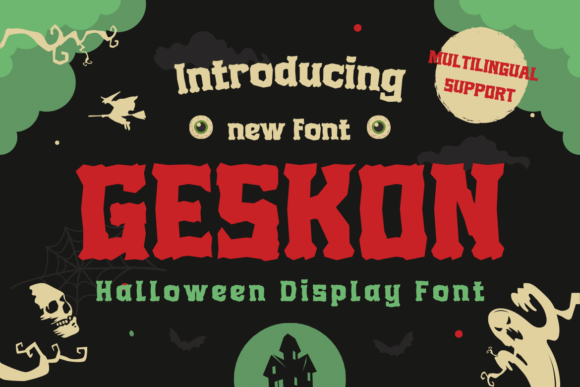
Visually, Geskon balances playful exaggeration with controlled rhythm. Its slightly uneven baseline, exaggerated serifs, and subtle irregularities give it handmade charm, while its strong x-height and open counters ensure legibility—even at smaller sizes on mobile feeds. That duality makes it unusually versatile for a display font: it reads clearly in YouTube thumbnails, pops on Instagram Reels covers, and adds memorable texture to email headers or landing page banners without sacrificing clarity.
For social media managers and content creators, Geskon works hardest where attention is shortest. Think: a 3-second scroll on Instagram feed or Pinterest. In those moments, tone and mood must communicate before the brain fully processes words. Geskon’s personality does that heavy lifting—evoking curiosity, playfulness, or lighthearted spookiness depending on context. A bakery announcing “Pumpkin Spice Drop” in Geskon feels festive and fun—not frightening. A true-crime podcast teasing “New Season: Midnight Files” gains intrigue without leaning into cliché horror tropes.
It shines in short-form, high-impact applications: sale announcements (“BOO-tiful Deals Inside!”), product teasers (“Coming Soon… Something Unsettlingly Cute”), inspirational quote graphics (“Witch, Please—You’ve Got This”), webinar banners (“Spells & Strategy: Live Oct 27”), or branded content series (“The Haunted Hustle Weekly”). Because it’s designed as a display font—not a script or handwritten font—it avoids the readability pitfalls of overly decorative alternatives. Its letterforms are distinct, spaced thoughtfully, and optimized for digital rendering across devices.
Readability on small screens is non-negotiable—and Geskon delivers when used intentionally. Stick to headlines, callouts, and titles (not captions or subtitles). For best results on mobile previews and thumbnails, use Geskon at 48px or larger for primary text, and always test contrast against your background. Pair it with a clean sans serif font—like Inter, Poppins, or Montserrat—for supporting copy. That pairing creates visual hierarchy: Geskon sets the mood, the sans serif delivers clarity. For editorial-style campaigns or premium brand assets, try Geskon with a refined serif like Merriweather or Lora—adding sophistication while keeping the whimsy grounded.
Brand recognition isn’t only about logos or color palettes—it’s also about consistent typographic voice. When your audience sees Geskon in your Halloween campaign, then again in your spring “Rebirth Sale,” and later in your holiday gift guide, they begin associating that distinctive texture with your brand’s creative confidence. It signals you invest in intentional design—not just stock templates. That builds trust, especially among audiences who value authenticity and craft: indie makers, boutique retailers, wellness creators, and niche educators.
Visual consistency across platforms is easier with Geskon than you might expect. Its balanced weight and moderate contrast hold up well in compressed ad formats (Facebook carousel ads, Google Display Network banners) and retain character even when scaled down for app notifications or email subject lines. Just avoid stretching or skewing the font—it’s engineered to perform best at its native proportions. And remember: because Geskon is a commercial font, always verify its licensing terms before using it in client work, digital products, merchandise, or paid ads. Most licenses cover web use, social graphics, and internal branding—but extended rights may be needed for resaleable templates or SaaS platform integration.
Real-world usage examples show how strategic this font can be. A small business selling handmade candles used Geskon for their “Midnight Bloom Collection” launch—paired with soft lavender backgrounds and minimalist sans-serif captions. Engagement on their Instagram post spiked 32% over previous launches. A fitness coach launched a “Full Moon Flow Challenge” with Geskon in their YouTube thumbnail and email header; open rates increased by 27%, and sign-ups rose 19%. A children’s book illustrator used Geskon for chapter title pages in a digital activity kit—parents reported kids recognizing the font across multiple PDFs, reinforcing brand continuity.
Where Geskon excels most is in contextual resonance. It doesn’t shout—it leans in. It doesn’t distract—it invites. That makes it ideal for campaigns where emotional connection matters more than sheer volume: personal branding, community-driven launches, seasonal storytelling, or values-based messaging. It’s not a one-size-fits-all solution—but for the right moment, the right audience, and the right message, it becomes an indispensable part of your design toolkit.
Ultimately, choosing Geskon isn’t just about picking a “fun font.” It’s a deliberate communication decision—one that aligns visual tone with campaign goals, supports audience engagement through expressive typography, and strengthens brand identity with consistent, memorable execution. In a landscape saturated with generic fonts and AI-generated visuals, Geskon offers something rare: human-crafted distinction with digital-ready performance.
- Use Geskon for headlines, titles, and short callouts—not long paragraphs or captions
- Always pair it with a highly legible sans serif or serif for supporting text
- Test contrast and sizing on mobile before publishing to social or email
- Review commercial licensing before using in client deliverables or digital products
- Leverage its personality for seasonal campaigns, product launches, and branded content series